
I cannot claim the following thoughts to be entirely original, even when I arrived at them independently. They have been thought before by greater people than myself, in one form or another. This is merely a recital of some of my own random thoughts.
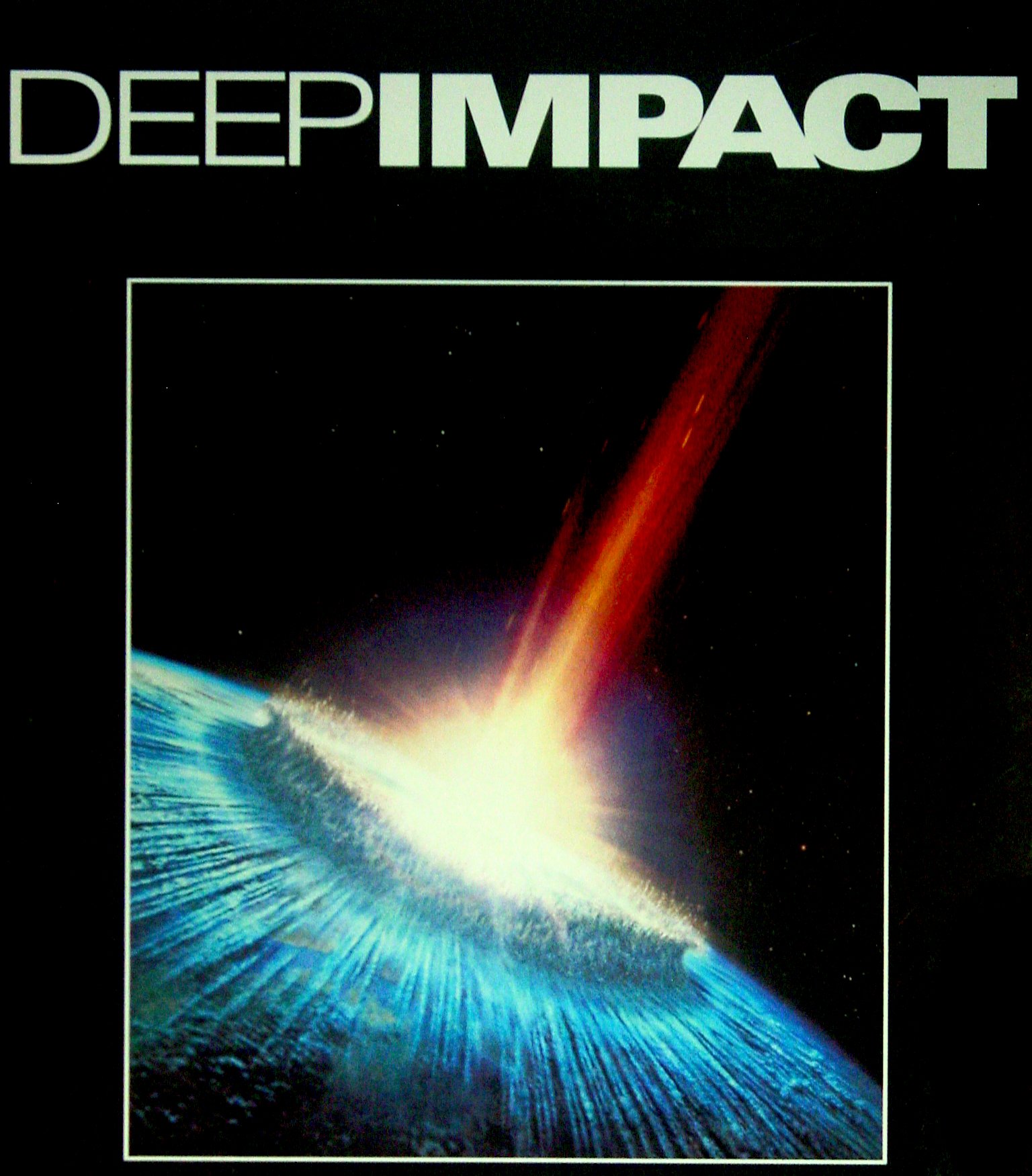
I recently rewatched Deep Impact in a desperate attempt to relive a moment in my life when I was fascinated by disaster movies. I still am, but "I am busy with matters of consequence!"
If I were to rank this movie, it would be in a tie with Knowing. It does everything better story-wise, except for the ending. I couldn't care less about the people in Deep Impact, except for that one moment where the protagonist disappears underneath the tidal wave with her father, on the beach. That moment was something that has been deeply ingrained into my mind ever since I watched this movie as a little kid and it's now part of the reason why I'm like that.
The movie was surprisingly hopeful. People don't write hopeful stories like that anymore. They don't trust institutions as they used to, and they have every right not to, considering the infinite insanity surrounding us now. People act calmly and rationally and trust the government even when millions die because of its failings. It is very much a product of its time.
This movie was written, set up, shot, and then edited into a product that is essentially selling tragedy for entertainment. It was made to evoke specific emotions within the confines of our attention spans and shared knowledge, which allow us to understand symbols, anticipate things like a jump scare, and even feel emotions like secondhand embarrassment for a fictional character we've just met on the screen. We call them standards and conventions, which are mostly followed by the director's own intuition for shot composition, shot duration, musical choice, transitions, and many more things.
However, what does it ultimately mean to be good or universally appealing? What has one achieved then? What does it say about the director or screenwriter? That they think like most people? That the audience would have made the exact same cuts and directing decisions if they were to make that same movie?
What was the ultimate intention of the director: to have a good, tragic story or to make it entertaining, too? What about period movies that depict real tragedy? To depict real tragedy in a movie, it has to be sensationalized and made appealing and entertaining for it to work in that medium, whereby the claim that the movie offers some insight into history loses all integrity. Tragedy sells; it attracts attention. We have a morbid curiosity that drives us towards it. We have a whole seperate genre dedicated to it in books, movies, and plays.
Some people process tragic imagery as if it were real --as, on some occasions, it might truly be-- and take it to their hearts and suffer for it. Some other people can clearly differentiate what they consume from reality, and then there are those who get numbed by it all and react accordingly.
I enjoyed the movie, very much so with a morbid sense of curiosity, and I will watch it again, consume it with impunity.
Taking the larger media landscape of the internet into account, these are small potatoes I'm complaining about here. Commodified tragedy surrounds us everywhere: from YouTube videos, Nat Geo documentaries, news reports, to even the occasional inspirational breakup text on Instagram. Was there any malice or commodification intended by any of those media outlets? Was it perhaps a way for someone to deal with their own trauma and connect with strangers for comfort, or was it born out of the sheer necessity of an organization trying to inform the greater public about some danger that is relevant to, or might even affect, the viewer directly? Then there are people trying to monetize sincerity in the real world. I decided to skillfully ignore this phenomenon, as it's a whole different conversation altogether, which you may find something about in the further reading section.
Until next time!